/blog
Discover the latest trends in recruitment, video interviews, and talent management

Recent articles
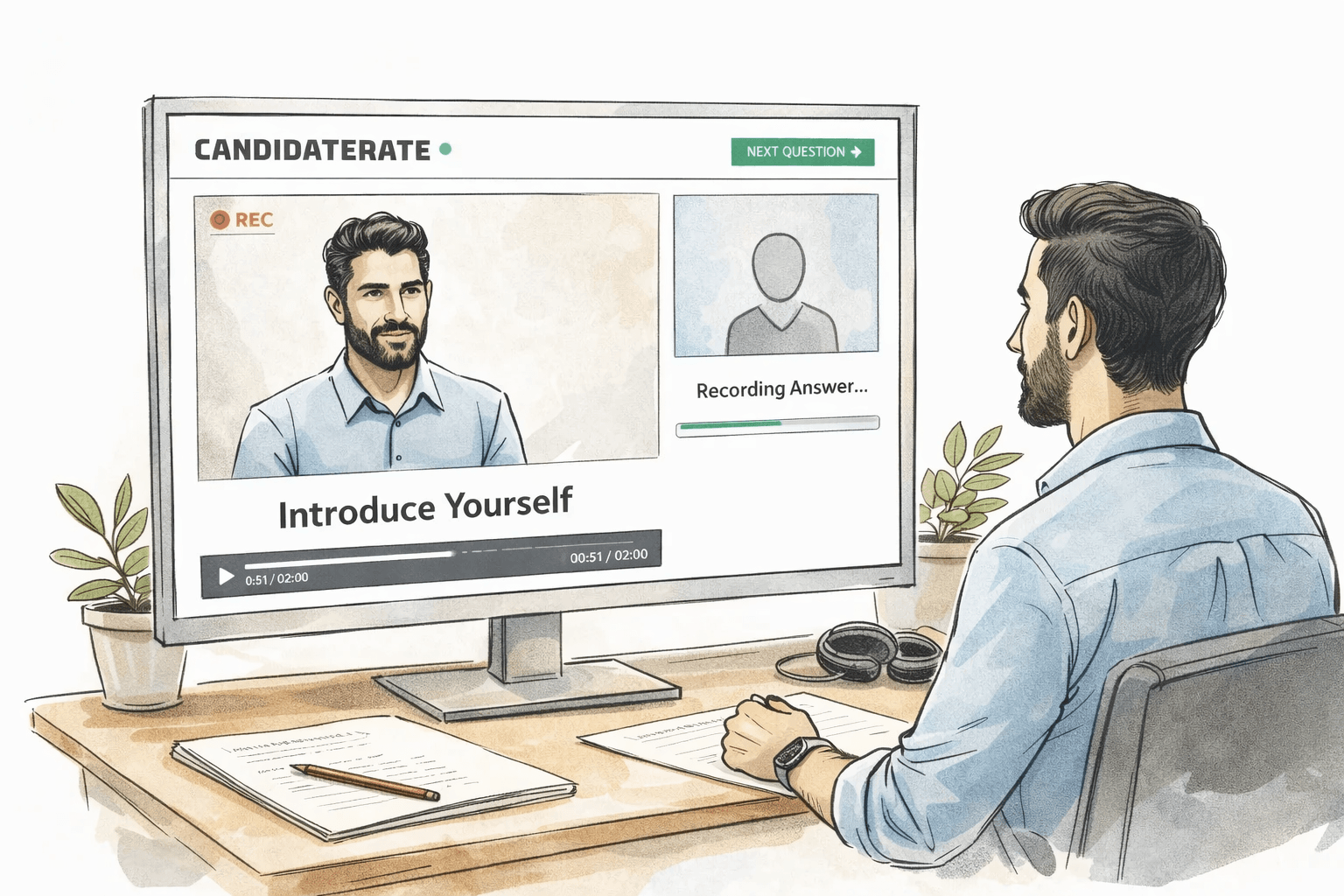
Asynchronous video interviews: what they are, how to create them, and how to implement them
Learn what asynchronous video interviews are, how to create them, and how to implement them in your hiring process.

High-Volume Hiring: How to Manage 200+ Candidates Without Burning Out Your Team
High-volume hiring is not just about volume. It is a process-design problem. Here is how to manage hundreds of applicants without slowing down or lowering the bar.

Candidate Ghosting: Why It Happens and How to Reduce It in Your Hiring Process
Candidate ghosting is not just bad manners. It is usually a warning sign that your hiring process has too much friction. Here is how to fix it.

Time to Hire: What It Is, How to Measure It, and How to Reduce It
Learn what time to hire really measures, how to calculate it consistently, and which hiring bottlenecks matter most if you want to bring it down.

Attendance Problems Often Start in the Interview Process
Workplace absenteeism is usually treated as a post-hire issue, but many reliability signals show up much earlier. Here is how to spot them during screening.

Asynchronous Video Interview Questions: Examples and Best Practices
Which questions work best in one-way video interviews, which ones should you avoid, and how should you order them? This guide breaks it down.
Asynchronous Video Interviews: A Complete Guide for Recruiters
What are asynchronous video interviews, when should you use them, and how do you introduce them without hurting candidate experience? This guide covers the basics.
How to Screen Candidates for Free in 2026: A Practical Guide for Small Teams
Overwhelmed by resumes? Learn how to screen candidates for free, save time, and know when it is worth moving beyond manual methods.

150+ Recruiting Statistics Every Hiring Team Should Know in 2026
The most useful recruiting statistics are the ones that change how you source, screen, and move candidates. Here is how to read the numbers that matter.

Case Study: How a Barcelona Startup Reviewed 500 Candidates in Two Weeks
This case study breaks down how a startup reworked early-stage screening to handle volume faster and free up time for final interviews.
Is Your Screening Process Broken? 7 Warning Signs and How to Fix Them
Slow review, inconsistent recruiter judgment, and low-signal first calls are not isolated problems. They are signs that your screening process needs redesign.

How AI Is Changing Hiring in 2026: 5 Practical Shifts That Matter
AI is changing recruiting most where it removes repetitive work, speeds up early review, and gives hiring teams clearer signals to act on.
7 Ways to Optimize HR in 2026: From Manual Workflows to Smarter Hiring Systems
HR optimization is not about buying more software. It is about removing repetitive work, structuring decisions, and simplifying the steps that slow teams down.